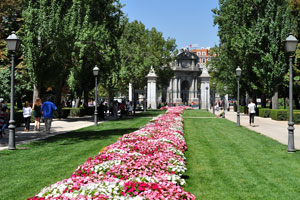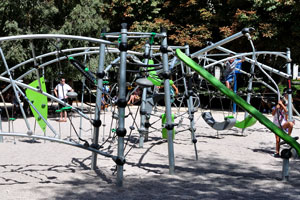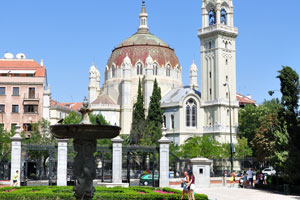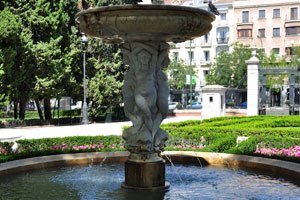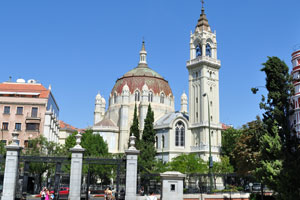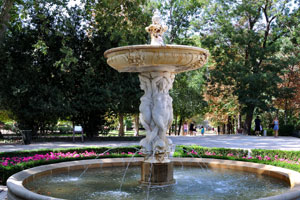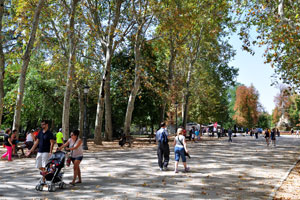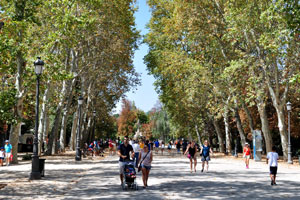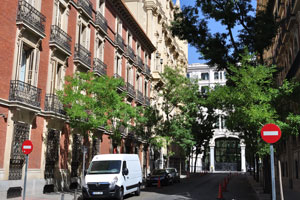
This is the intersection between Calle de Juan de Mena and Calle de Ruiz de Alarcón streets. |
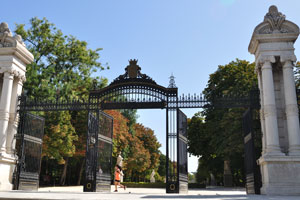
“Puerta España” gate is located on the west side of the park. |
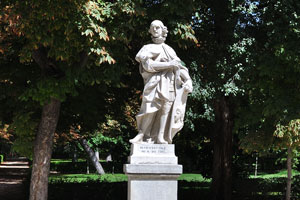
The statue of Fernando IV “1312” is located on Paseo de la Argentina. |
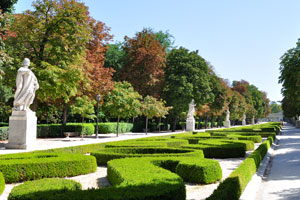
Paseo de la Argentina. |
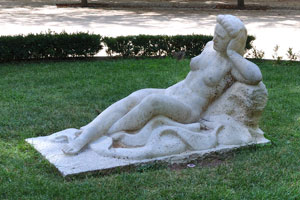
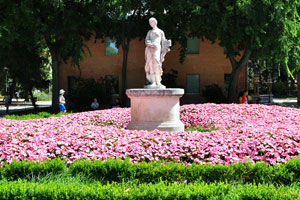
The statue of a nude woman is placed near Paseo de la Argentina. |
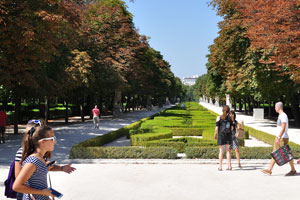
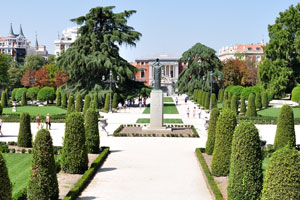
Jacinto Benavente statue is placed in Plaza Parterre. |
Plaza Parterre square. |
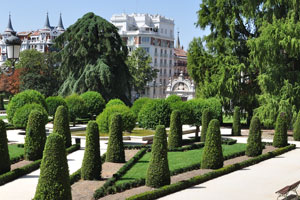
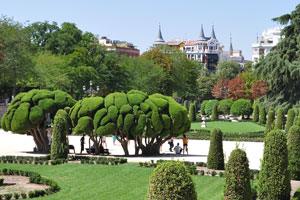
Fabulously pruned trees grow in Plaza Parterre square. |
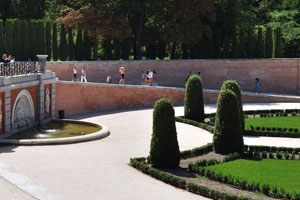
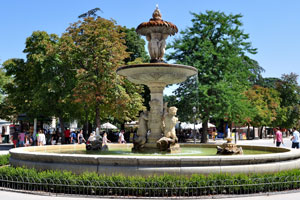
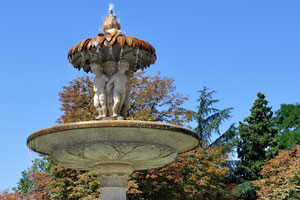
This fountain is located in Plaza Parterre square, behind the statue of Jacinto Benavente. |
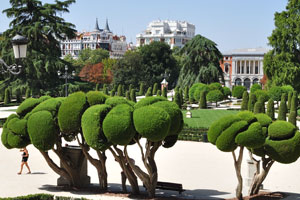
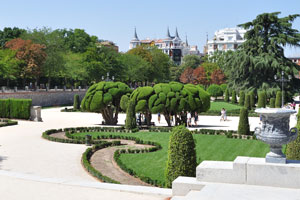
Neatly pruned trees of round shapes grow in Plaza Parterre square. |
This is the rear side of Jacinto Benavente statue which is placed in Plaza Parterre. |
Plaza Parterre is one of the highlights of Buen Retiro Park. |
Fuente de la Alcachofa sculpture. |
Fuente de la Alcachofa fountain. |
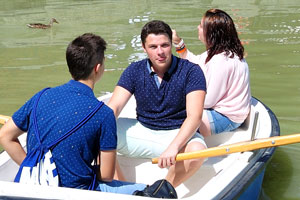
Young lad is showing tongue to me while floating on the boat #69. |
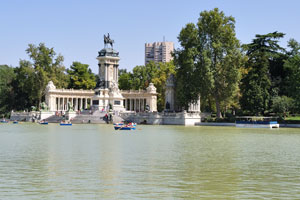
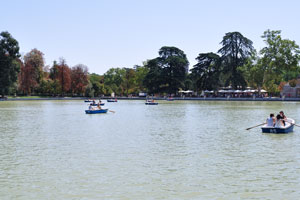
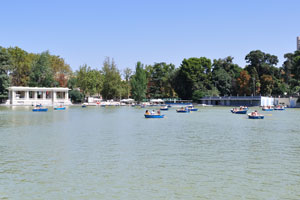
Estanque Grande del Retiro pond. |
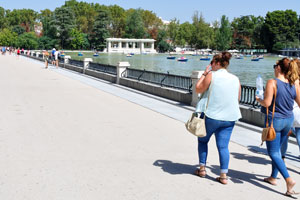
This esplanade goes along Estanque Grande del Retiro pond. |
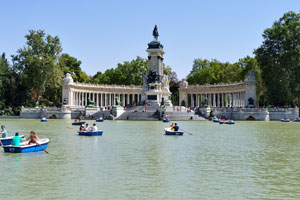
Monumento Alfonso XII is dominated over Estanque Grande del Retiro pond. |
Rowboats can be rented to paddle across Estanque Grande del Retiro pond. |
Rowboats float across Estanque Grande del Retiro pond. |
Paseo Argentina. |
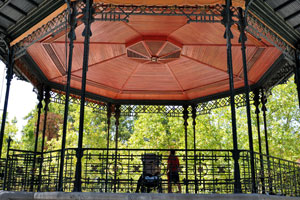
Monumento Alfonso XII. |
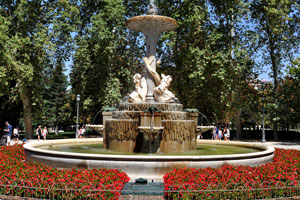
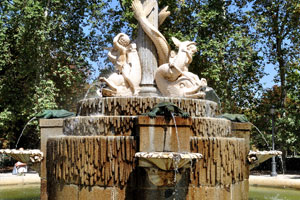
Fuente de los Galápagos fountain is surrounded by red flowers. |
Fuente de los Galápagos fountain. |
Parroquia de San Manuel y San Benito catholic church is located near the northern side of the park. |
Retiro (Laurel) fountain. |
Retiro is a metro station which serves the Retiro District and Buen Retiro Park. |
The Antonio Mingote “1919-2012” monument is located near the northern side of the park. |
Templete del Retiro concert hall. |
Templete del Retiro concert hall is located near Retiro metro station. |
This is the northern promenade of the park. |
This is the wide northern esplanade of the park. |
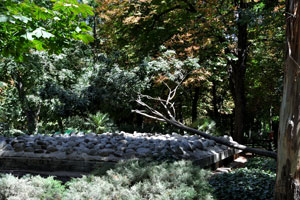
A decoration is made from the round stones. |
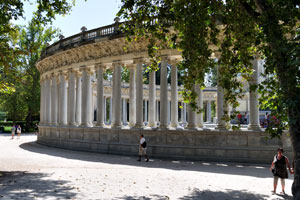
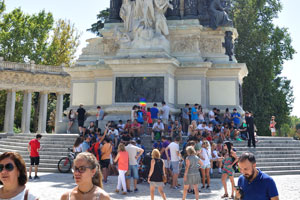
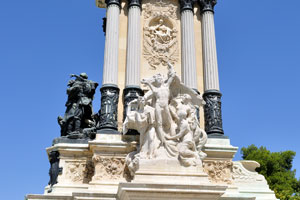
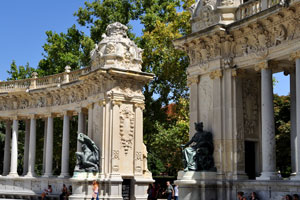
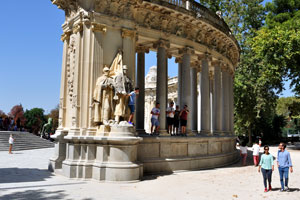
The monument of Alfonso XII is surrounded by the amazing colonnade. |
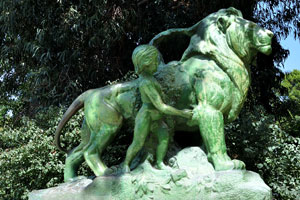
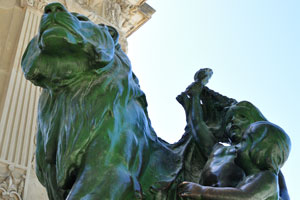
Lion and child statue is situated near the monument of Alfonso XII. |
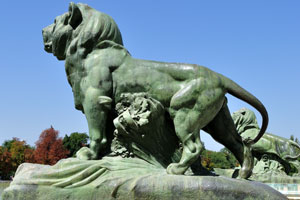
One of the four stone lions carved by Agapit Vallmitjana i Abarca and Pedro Estany. |
The Monument to King Alfonso XII is 30 meters high, 86 meters long, and 58 meters wide. |
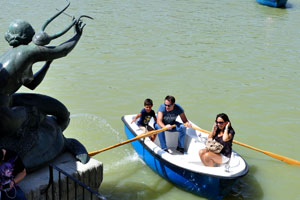
A rowboat with a happy family floats in Estanque Grande del Retiro pond at the foot of King Alfonso XII monument. |
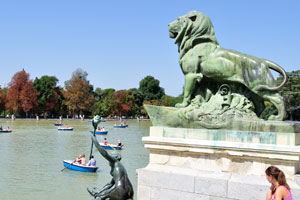
Stone statue of a lion overlooking Estanque Grande del Retiro pond. |
A magnificent lion statue has a green color. |
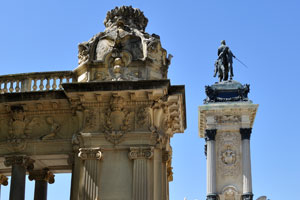
The equestrian statue of King Alfonso XII, cast in Bronze, was created by Benlliure in 1904. |
The magnificent colonnade surrounds the Monument to Alfonso XII. |
The Monument to King Alfonso XII is situated on the east edge of an artificial lake near the center of the park. |
The colonnade of Monument to Alfonso XII is decorated by the “El Ejército” (The Army) sculpture by José Montserrat. |
Paseo de Chile. |
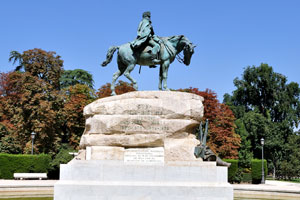
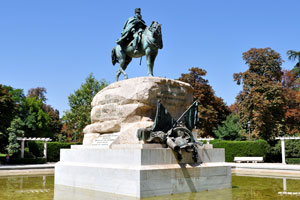
Monumento al general Martínez Campos is an equestrian monument. |
The equestrian monument to general Martínez Campos is located on Plaza de Guatemala. |
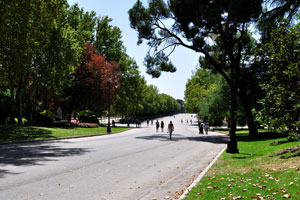
Paseo de Fernán Núñez. |
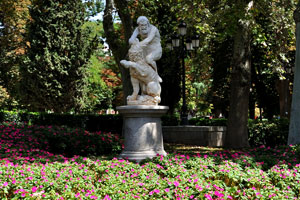
This statue is located on Paseo de Fernán Núñez near Plaza de Guatemala. |
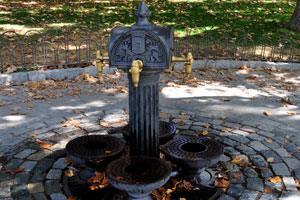
This public drinking water tap has the following geo coordinates: 40°25′00.0″N 3°40′48.0″W. |
This “Sofora de Japón” woman statue is located on Paseo de Fernán Núñez near the public drinking water tap. |
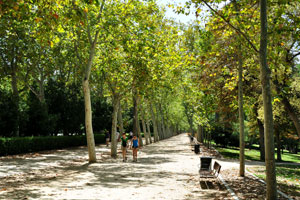
This shady footpath goes along Paseo de Fernán Núñez. |
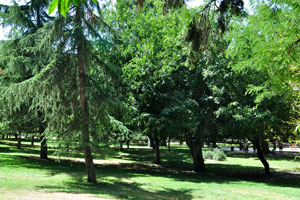
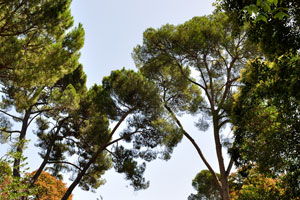
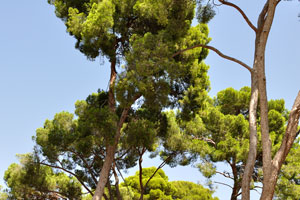
Coniferous trees. |
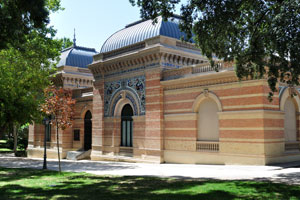
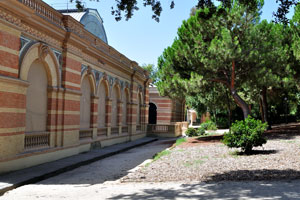
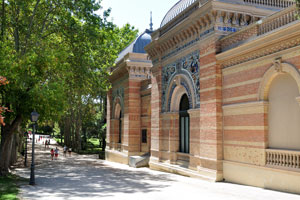
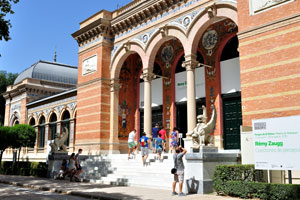
The Palacio de Velázquez museum. |
The Velázquez Palace was built between 1881 and 1883 for the National Exhibition of Mining held in Madrid from May to November 1883. |
The Velázquez Palace is an exhibition hall. |
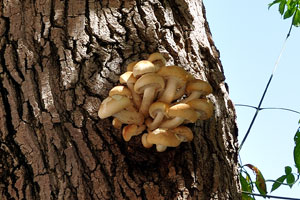
Armillaria mellea, commonly known as honey fungus, grow on a tree near the Velázquez Palace. |
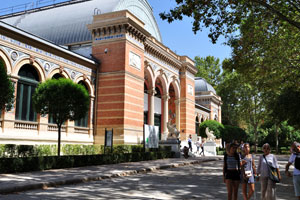
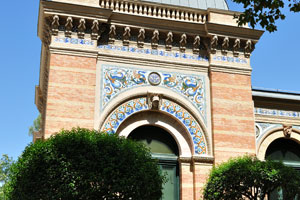
The facade of the Velázquez Palace. |
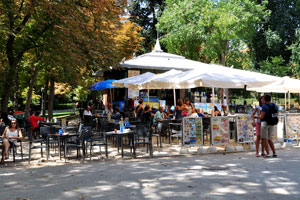
This cafe is located near the entrance to the Velázquez Palace. |
The Velázquez Palace occupies a central position in the park, between the large boating lake and the small lake next to the Palacio de Cristal. |
The Velázquez Palace is a large neoclassical, red-brick-and-tile building covered with iron vaults and glass to naturally illuminate the rooms. |
These buildings are somewhere on the footpath between the Velázquez Palace and the Crystal Palace. |
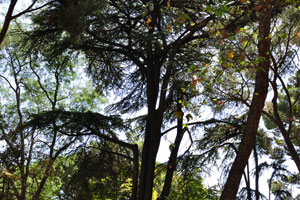
Tall coniferous trees of the park. |
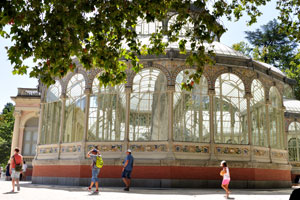
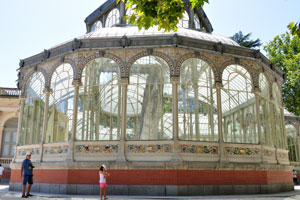
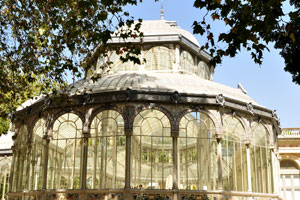
The Crystal Palace. |
The Crystal Palace is a glass and metal structure located in the park. |
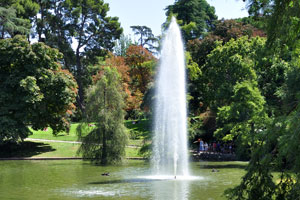
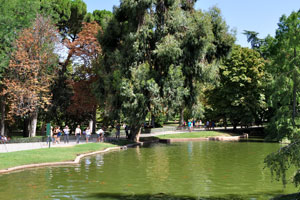
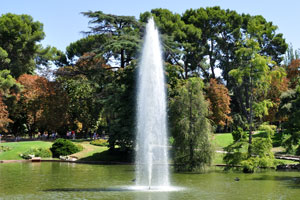
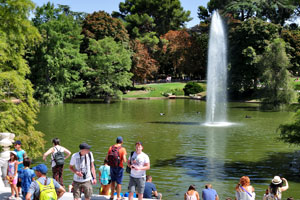
The fountain is installed in Crystal Palace pond. |
The pond of the Crystal Palace. |
The fountain is installed in the pond of Cascada Parque El Retiro water park. |
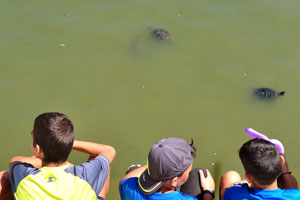
Boys are watching the aquatic turtles of Crystal Palace pond. |
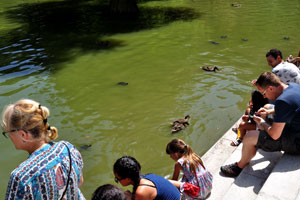
Tourists are feeding the ducks and the aquatic turtles of Crystal Palace pond. |
The Crystal Palace was built in 1887 to exhibit flora and fauna from the Philippines, then a Spanish colonial possession. |
The architect of the Crystal Palace is Ricardo Velázquez Bosco. |
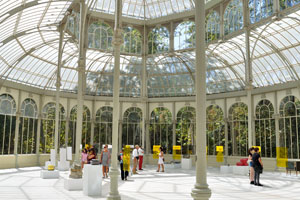
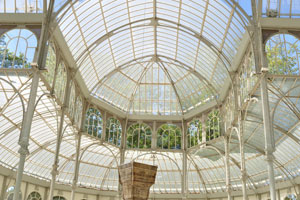
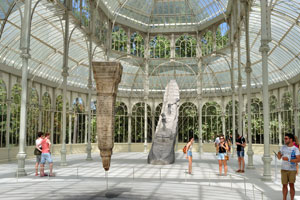
The Crystal Palace is made almost entirely of glass set in an iron framework. |
The cupola of Crystal Palace makes the structure over 22 metres high. |
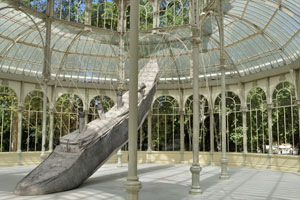
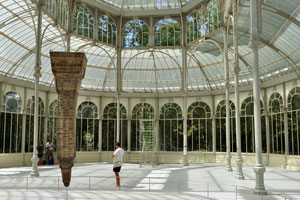
An inscription at the art exhibition of the Crystal Palace reads: “Seduction is the subtle destruction of the social”. |
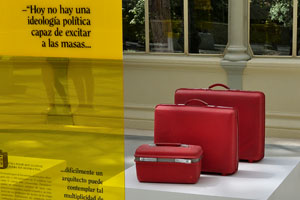
An inscription at the art exhibition of the Crystal Palace reads: “Today there is no political ideology capable of arousing the masses”. |
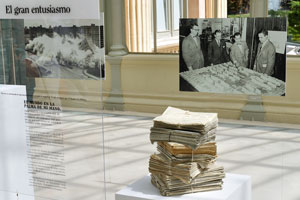
An inscription at the art exhibition of the Crystal Palace reads: “The great enthusiasm”. |
The Crystal Palace is no longer used as a greenhouse, and is currently used for art exhibits. |
Crystal Palace pond with its fountain is magnificent. |
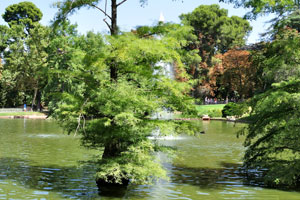
Some coniferous trees grow right out of the water of Crystal Palace pond. |
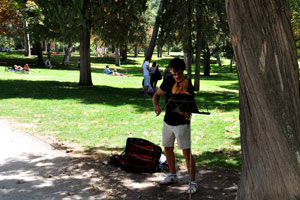
A violinist plays near the Crystal Palace. |
The cast-iron frame of Crystal Palace was manufactured in Bilbao. |
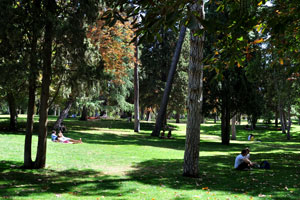
Green lawns of the park are marvellous! |
The canopies of coniferous trees give a dense shadow. |
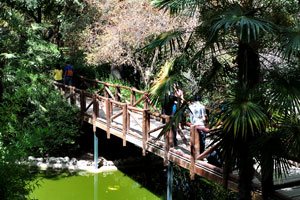
A garden bridge is in the shade of trees. |
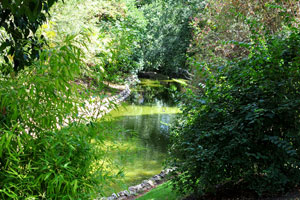
A narrow and long pond. |
A garden bridge spans over a narrow pond. |
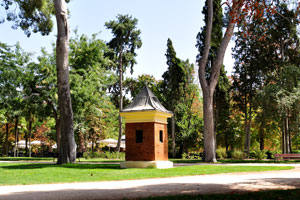
A small funny construction. |
Tall and mature coniferous trees of the park. |
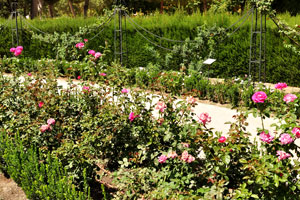
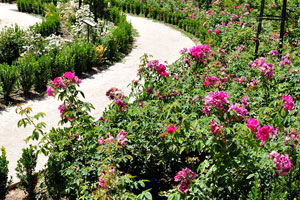
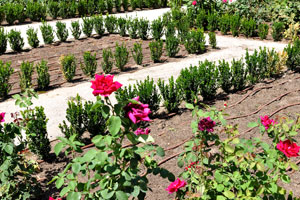
La Rosaleda park. |
The main entrance to La Rosaleda park. |
La Rosaleda “rose-garden” park. |
La Rosaleda fountain. |
Rose “Papa Meilland” Híbrido de Té (obt. Meilland Francia) grows in La Rosaleda. |
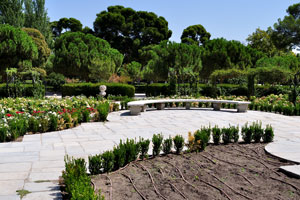
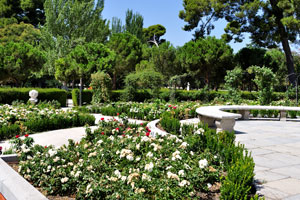
A stone bench is placed in La Rosaleda. |
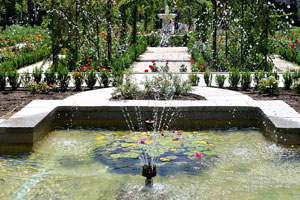
A fountain is in La Rosaleda. |
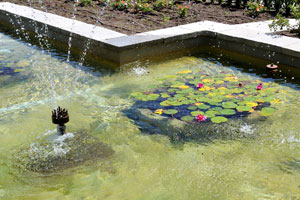
Water lilies grow in the fountain of La Rosaleda. |
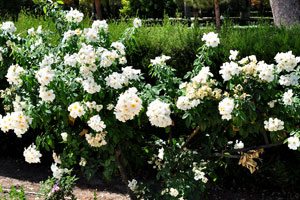
White roses grow in La Rosaleda. |
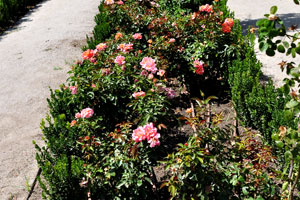
Rose “Carte D′Or Floribunda” (obt. Meilland Francia) grows in La Rosaleda. |
Rose “Daniel Gelin Floribunda” (obt. Meilland Francia) grows in La Rosaleda. |
A white blooming shrub of Rosaceae family grows in La Rosaleda. |
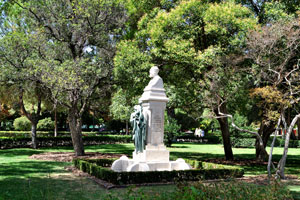
The “Doctor Manuel de Tolosa-Latour” monument is located near La Rosaleda garden. |
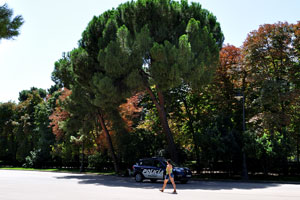
“Madrid Municipal Police” automobile is in the park. |
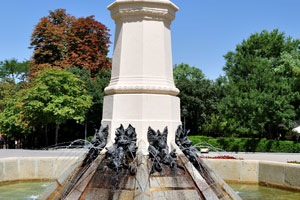
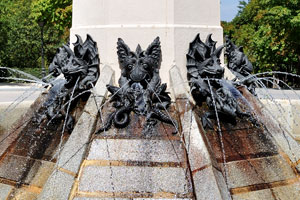
The Fountain of the Fallen Angel is a highlight of the park. |
The Monument of the Fallen Angel. |
The pedestal of the Monument of the Fallen Angel is octagonal with figures of devils on each side gripping fishes, lizards and snakes. |
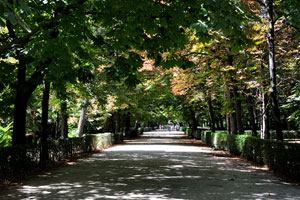
Paseo Marqués de Pontejos as seen from Paseo de Cuba. |
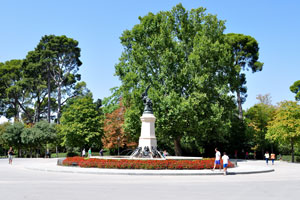
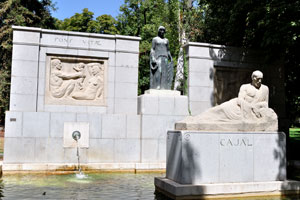
The “Monumento a Ramón y Cajal” monument. |
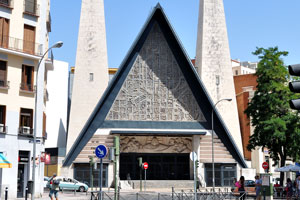
Blessed Sacrament Parish “Parroquia del Santísimo Sacramento” catholic church. |
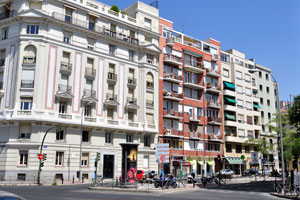
This building is located on Calle de Ibiza street #1, it is close to the eastern wall of the park. |
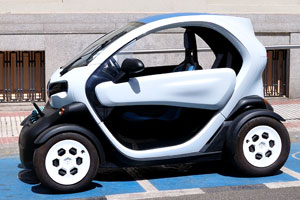
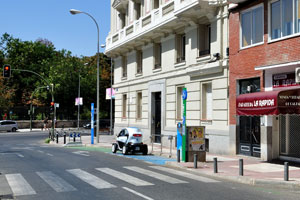
The Renault Twizy is charging at a carsharing station on Calle de Ibiza #1, it is close to the eastern wall of the park. |
The Renault Twizy is charging at a carsharing station on Calle de Ibiza #1 in Madrid, it is close to the eastern wall of Buen Retiro Park. |