Monumental Tomb (Heroon) of Pericles King of Lycia-Limyra 4th century BC
 Travel photography
Family-friendly: true
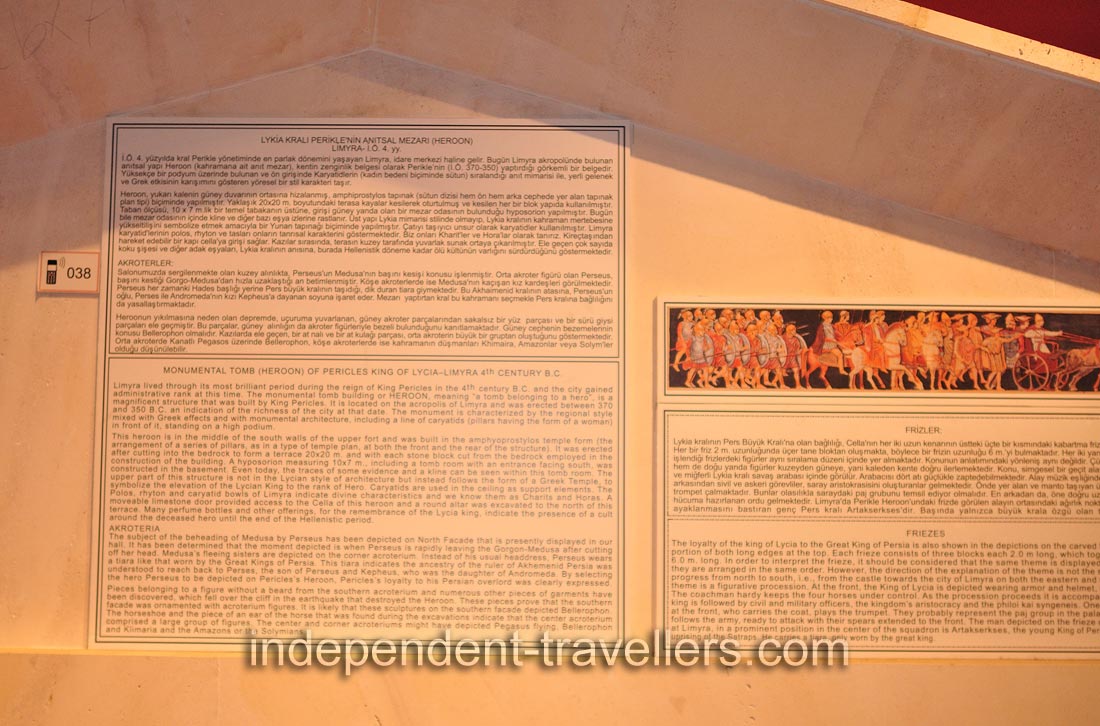
Limyra lived through its most brilliant period during the reign of King Pericles in the 4th century ВС and the city gained administrative rank at this time. The monumental tomb building or Heroon, meaning "a tomb belonging to a hero", is a magnificent structure that was built by King Pericles. It is located on the acropolis of Limyra and was erected between 370 and 350 BC as an indication of the richness of the city at that date. The monument is characterized by the regional style mixed with Greek effects and with monumental architecture, including a line of caryatids (pillars having the form of a woman) in front of it, standing on a high podium.
This heroon is in the middle of the south walls of the upper fort and was built in the amphyoprostylos temple form (the arrangement of a series of pillars, as in a type of temple plan, at both the front and the rear of the structure). It was erected after cutting Into the bedrock to form a terrace 20x20 meters and with each stone block cut from the bedrock employed in the construction of the building. A hyposorion measuring 10x7 meters, including a tomb room with an entrance facing south, was constructed in the basement. Even today, the traces of some evidence and a kline can be seen within this tomb room. The upper part of this structure is not in the Lycian style of architecture but instead follows the form of a Greek Temple, to symbolize the elevation of the Lycian King to the rank of Hero. Caryatids are used in the ceiling as support elements. The Polos, rhyton and caryatid bowls of Limyra indicate divine characteristics and we know them as Charits and Horas. A moveable limestone door provided access to the Cella of this heroon and a round altar was excavated to the north of this terrace. Many perfume bottles and other offerings, for the remembrance of the Lycia king, indicate the presence of a cult around the deceased hero until the end of the Hellenistic period.
Akroteria. The subject of the beheading of Medusa by Perseus has been depicted on North Facade that is presently displayed in our hall. It has been determined that the moment depicted is when Perseus is rapidly leaving the Gorgon-Medusa after cutting off her head. Medusa's fleeing sisters are depicted on the corner acroterium. Instead of his usual headdress, Perseus wears a tiara like that worn by the Great Kings of Persia. This tiara indicates the ancestry of the ruler of Akhemenid Persia was understood to reach back to Perses, the son of Perseus and Kepheus, who was the daughter of Andromeda. By selecting the hero Perseus to be depicted on Pericles's Heroon. Pericles's loyalty to his Persian overlord was clearly expressed.
Pieces belonging to a figure without a beard from the southern acroterium and numerous other pieces of garments have been discovered, which fell over the cliff in the earthquake that destroyed the Heroon. These pieces prove that the southern facade was ornamented with acroterium figures. It is likely that these sculptures on the southern facade depicted Bellerophon. The horseshoe and the piece of an ear of the horse that was found during the excavations indicate that the center acroterium comprised a large group of figures. The center and corner acroteriums might have depicted Pegasus flying, Bellerophon and Klimaria and the Amazons or the Solymians.